
Best Garage Flooring Options for Pennsylvania Winters
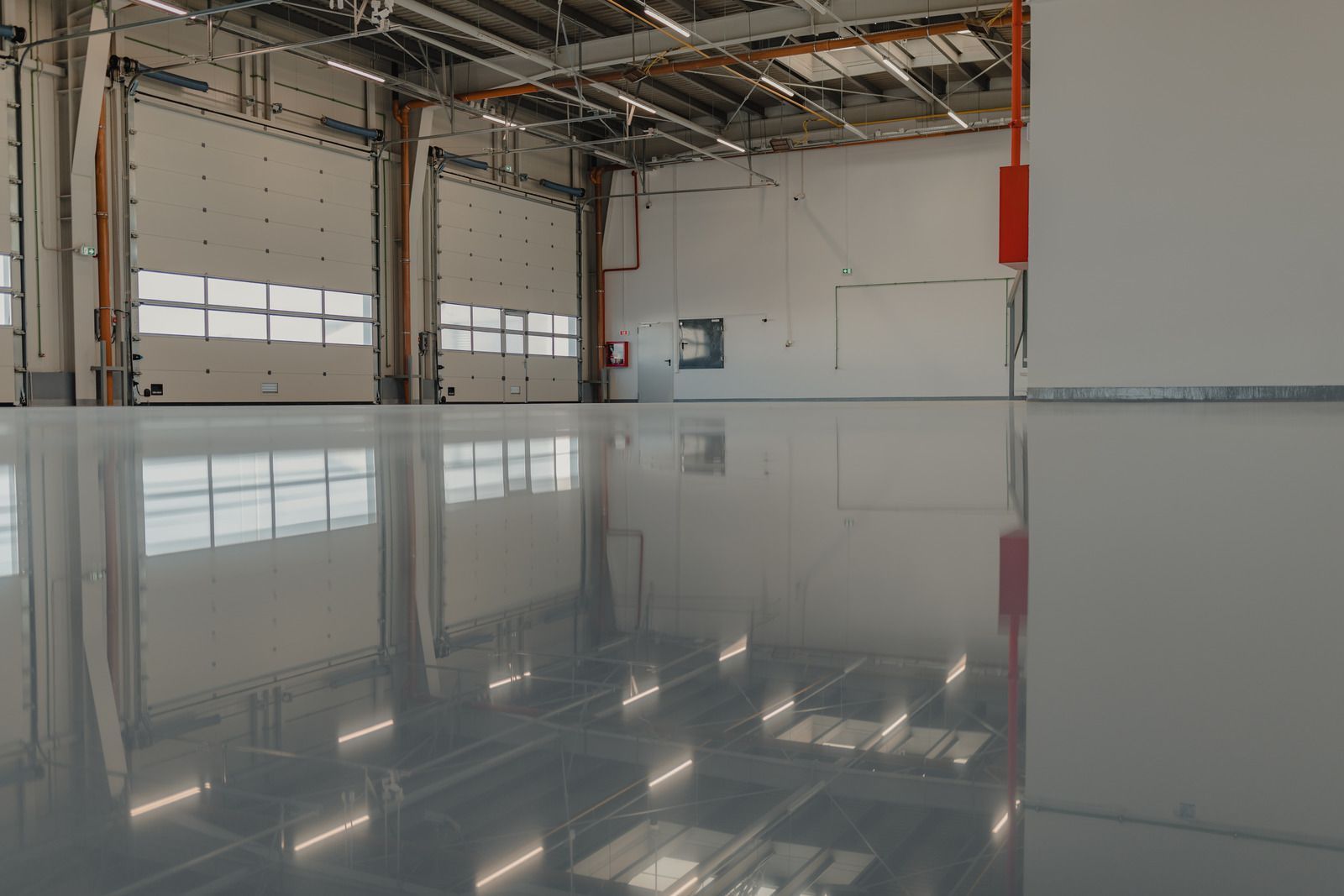
Quick Answer: For garages in Ridgway, St. Marys, DuBois, Bradford, and the rest of Elk County, fully bonded epoxy or polyaspartic coating systems generally outperform bare sealed concrete, acrylic sealers, and luxury vinyl plank (LVP) when it comes to snowmelt, road salt, mud, and freeze-thaw cycling. Coatings seal the slab against moisture and chloride intrusion while resisting the point loads and grit that ruin LVP. Penetrating concrete sealers protect the slab itself but leave the surface unfinished and slower to clean. LVP looks good but struggles with cold cracking, adhesive failure, and moisture trapped beneath the planks in an unheated bay. Tile and rubber mats each have narrow use cases. The right pick depends on how much moisture your slab sees and how the space gets used.
Garage Flooring Options That Stand Up to Northern Pennsylvania Winters
Every November, garages across Elk County go through the same routine. A car pulls in dripping with slush, tracks a slurry of road salt and gravel across the floor, and by March that same patch of concrete has pitted, flaked, or turned a chalky white color it never had in October. Ask around Ridgway or St. Marys and most homeowners have a floor story like this — a slab that looked fine when the house was built and now looks ten years older than the rest of the property. Winter is hard on garage floors, and northern Pennsylvania gets more of it than most of the state.
You have real options here, and they are not created equal. Bare concrete, epoxy and polyaspartic coatings, penetrating sealers, luxury vinyl plank, tile, and rubber mats all handle snow, salt, and freeze-thaw cycling differently. This guide compares them side by side against the conditions that actually define a garage floor's lifespan up here — not showroom lighting, but slush, mud, and repeated freezing.
Bare or Sealed Concrete: The Baseline
Bare concrete is what every garage starts with, and a lot of homes in the area still have it. It is porous, which means it absorbs oil, antifreeze, and salt brine directly into the slab. Stains set in permanently, and the freeze-thaw cycling described above works on that exposed surface every winter without anything slowing it down.
A penetrating sealer improves on bare concrete without changing its appearance. These products soak into the slab and reduce water absorption from within, which can meaningfully cut down on freeze-thaw scaling and efflorescence — the chalky white mineral deposits that show up when moisture keeps moving through the concrete (RadonSeal). What a penetrating sealer does not do is give you a finished, easy-to-clean surface. Oil still stains it, tire marks still show, and it does not stop salt and grit from grinding away at the exposed concrete texture over time.
Film-forming acrylic sealers — the kind sold in most hardware stores — are a different story. They sit on top of the slab rather than soaking in, and that surface film tends to wear away within one to two years under regular vehicle traffic, then trap moisture underneath as it breaks down (RadonSeal). For a daily-use garage in a place that sees this much winter weather, an acrylic sealer is closer to a temporary fix than a real flooring plan.
Verdict against winter conditions: Bare concrete offers no real protection. A quality penetrating sealer helps the slab itself but leaves a working surface that still stains and wears. Neither creates a floor built to shrug off a full northern PA winter.
Epoxy and Polyaspartic Coatings
Epoxy and polyaspartic systems work as a category here, since we cover the differences between the two coating chemistries in detail elsewhere. What matters for this comparison is what a properly installed coating — either type — does that uncoated concrete and film sealers cannot.
A bonded coating system seals the entire slab surface in a continuous layer, which keeps salt brine, meltwater, and antifreeze from soaking into the concrete pores in the first place. That matters more in this climate than almost anywhere else in the state, because it is the repeated freeze-thaw cycling of saturated concrete that does the real long-term damage. If the water and chlorides never get into the slab, they cannot expand inside it or corrode what is underneath.
Moisture Management Is The Deciding Factor
Coatings fail when they go down over a slab that has not been properly prepared or when the concrete is still releasing vapor from below. That is why we mechanically grind every floor before coating and install vapor-blocking primers where testing shows they are needed — skipping that step is the single most common reason coatings bubble or peel, according to both our own field experience and coating manufacturer guidance. Done right, a coating stays bonded through the seasonal swings that would otherwise push moisture up against the underside of a finish.
Traction Matters In A Slush-And-Melt Garage
Standard coatings can get slick when wet boots and tires track snowmelt across them. We blend traction additives into the topcoat on the floors we install specifically to address this, since a smooth glossy finish without grip is a liability the first time someone steps out of a car with wet boots in January.
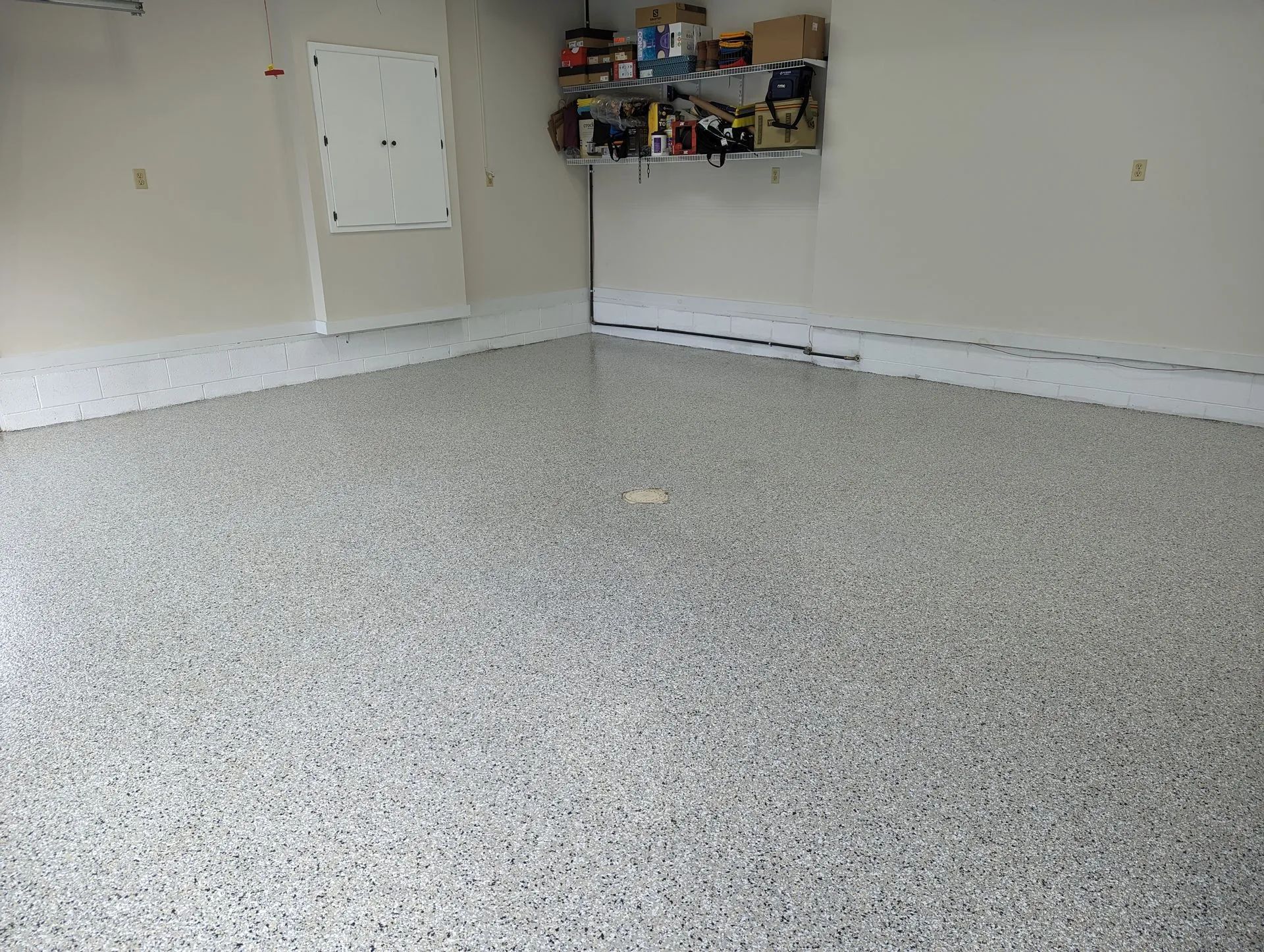
Broadcast flake and metallic finishes add another layer of practical value beyond the decorative appeal — the texture they create underfoot helps hide the fine scratching and grit-wear that road salt and gravel cause over years of winter traffic, so the floor stays presentable longer between refinishing.
Tip: If your garage floor already shows chalky white staining or fine surface pitting, that is early efflorescence and freeze-thaw scaling talking. Address it before winter, not after — a floor coated over active moisture problems will fail faster than one coated on a dry, properly prepped slab.
Verdict Against Winter Conditions
A properly prepped and installed coating is the strongest option in this comparison for resisting salt intrusion, freeze-thaw saturation, and the abrasive grit that comes with gravel driveways and mud season, while still giving you an easy-to-clean, finished surface.
Luxury Vinyl Plank (LVP)
LVP has a real place in this region's homes — it holds up beautifully in kitchens, bathrooms, mudrooms, and basements, and we install it often for exactly that reason. Garages are a harder environment for it, and it is worth being honest about why.
Cold Temperature Swings Affect The Material Itself
Vinyl plank is a rigid polymer product engineered around fairly stable indoor temperatures. In an unheated garage that swings from summer heat into single-digit January nights, the planks expand and contract more than they would in a conditioned room. Over repeated cycles, that movement can open gaps at the seams or stress the locking edges on click-lock products.
Adhesive And Moisture Are A Bad Combination Underfoot
Glue-down LVP depends on a strong, stable bond to the subfloor. Moisture wicking up through a concrete slab — the same vapor transmission that threatens coatings without a barrier — can soften or break down that adhesive bond from underneath, leading to lifting planks in exactly the areas where melting snow drips off a parked vehicle.
Point Loads Are A Known Weak Spot
Vehicle tires, jack stands, and rolling tool chests concentrate a lot of weight onto small areas. Garage owners who have tried LVP in working garages consistently report indentation, edge damage, and adhesive failure under this kind of load, particularly where a vehicle's tires sit in the same spot for weeks at a time during winter parking.
Salt And Grit Accelerate Surface Wear
LVP wear layers resist scuffing in normal foot traffic, but the combination of road salt crystals and gravel grit ground in by tires is more abrasive than what the product is designed to handle in a living space.
Warning: LVP installed directly over a garage slab without a proper moisture-rated underlayment and a fully leveled subfloor is at high risk of lifting, staining, or adhesive breakdown within one or two winters. If you want the wood-look aesthetic in a garage-adjacent space, ask about where that flooring transition should actually happen.
Verdict Against Winter Conditions
LVP is a strong choice elsewhere in the house, but an unheated, salt-and-slush garage plays against nearly every one of its weak points. It is better suited to finished, climate-controlled bonus rooms built off a garage than to the parking bay itself.
Comparing the Field
When you line these options up against snow, salt, mud, and freeze-thaw specifically, a pattern shows up quickly. Uncoated concrete and thin acrylic sealers offer little resistance to any of it. Penetrating sealers protect the slab's structure but leave a working surface that still stains and shows wear. LVP brings a beautiful, warm look that fights against its own construction in a cold, wet garage. Tile can work but depends heavily on a stable substrate and careful installation. Rubber mats manage symptoms without solving the underlying moisture problem.
A fully bonded epoxy or polyaspartic coating system is the option built specifically to seal the slab, resist chloride intrusion, and handle the abrasive combination of grit, moisture, and cold that defines an Elk County winter — while still giving you a floor that is genuinely easy to clean after every storm.
Tile and Rubber Mats: Situational Options
Porcelain tile can perform well in a garage when it is installed correctly over a flat, stable substrate, and it resists staining and chemical exposure better than most alternatives. The tradeoff is that grout lines collect salt brine and grit, and any flex or settling in the slab beneath the tile can eventually crack individual pieces — a risk that goes up, not down, with more freeze-thaw cycles working on the concrete underneath.
Interlocking rubber tiles or roll-out mats are a low-commitment option many homeowners try first. They provide decent traction and cushion underfoot, and they are easy to pull up and hose off. They do not bond to the slab or protect it from moisture and salt intrusion, though, so the concrete underneath keeps absorbing everything that drips through the seams. Mats are a reasonable stopgap, not a long-term winter solution.
Frequently Asked Questions
Does road salt actually damage a garage floor, or is that overstated?
Yes. Road salt accelerates concrete deterioration by allowing chloride-laden meltwater to penetrate porous surfaces. Combined with repeated freeze-thaw cycles, this moisture can cause scaling, pitting, cracking, and gradual surface breakdown.
Can I install LVP in a garage if I add heat to the space?
Heating a garage reduces temperature swings that can affect LVP, but moisture and vehicle weight remain concerns. Proper moisture barriers, underlayment, and suitable installation methods are still essential for lasting performance.
Is a penetrating sealer enough for a garage that sees light winter use?
A penetrating sealer can work well for garages with limited winter vehicle traffic by reducing moisture absorption and efflorescence. Daily exposure to salt and slush generally requires stronger surface protection instead.
Why does moisture coming up through the slab matter so much for coatings?
Concrete naturally allows moisture vapor to move through the slab. Without proper preparation or vapor control, trapped moisture can cause garage floor coatings to bubble, separate, peel, or prematurely lose adhesion.
What is the biggest mistake homeowners make with garage flooring in this climate?
Choosing garage flooring mainly for appearance can lead to premature deterioration. Pennsylvania garages need surfaces designed to withstand salt, moisture, gravel, temperature fluctuations, and repeated freeze-thaw cycles throughout the winter months.
How do I know if my current garage floor is already failing from winter exposure?
Common warning signs include white efflorescence, surface pitting, flaking concrete, hairline cracks, and peeling coatings. These conditions often indicate ongoing moisture, road salt, or freeze-thaw damage requiring attention before winter.
Built for the Winters Northern Pennsylvania Brings
Northern Pennsylvania does not give garage flooring an easy season. Snowmelt, road salt, gravel, mud, and repeated freezing continually test the surface and the concrete beneath it. For homeowners in Ridgway, PA, choosing flooring means looking beyond appearance and considering moisture resistance, durability, traction, and long-term slab protection. With 8 years of experience, Pa Epoxy Workss understands how these local winter conditions affect garage floors and why preparation matters just as much as the finished surface itself.
Epoxy and polyaspartic coatings stand out because they create a bonded barrier between the concrete and the moisture, chlorides, and abrasive debris brought inside throughout winter. Penetrating sealers, tile, rubber mats, and LVP each have situations where they can make sense, but their limitations become clearer in an active garage. Ultimately, the best garage flooring is one matched to how the space is actually used and capable of handling Pennsylvania's seasonal conditions without creating unnecessary maintenance or premature surface damage.
Recent Posts